Simple Moving Average (SMA) Explained
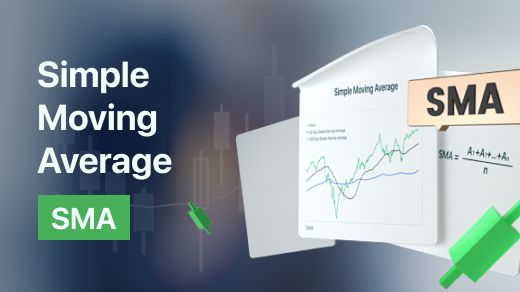
Simple Moving average (SMA) is a technical indicator for investors to use to determine the direction of a price trend.


Technical indicators are an important tool for traders to predict market trends and identify the entry or exit price point. Check out this course to learn more tips on how to use techinical indicators.
Simple Moving Average (SMA) Explained
What Is Exponential Moving Average (EMA)?
Moving Average Convergence Divergence (MACD) Explained
Understanding Relative Strength Index (RSI)
What Are Bollinger Bands (BOLL)?
Volume (VOL)
Stochastic Oscillator (STOCH) Indicator
Parabolic SAR
Historical Volatility (HV)
Implied Volatility (IV)
Ease of Movement Value (EOM)
Commodity Channel Index (CCI)
Psychological Line (PSY)
Volume Weighted Average Price (VWAP)
Tom DeMark 9 (TD9)
Different of Moving Average (DMA)
Williams %R (WR)
Momentum (MOM)
On-Balance Volume (OBV)
Support & Resistance (S&R) Indicator
Navigate Market Waves with Zig Zag
Technical indicators are an important tool for traders to predict market trends and identify the entry or exit price point. Check out this course to learn more tips on how to use techinical indicators.
Simple Moving average (SMA) is a technical indicator for investors to use to determine the direction of a price trend.
The Exponential Moving Average (EMA) is a technical indicator used in trading practices that shows how the price of an asset or security changes over a certain period of time.
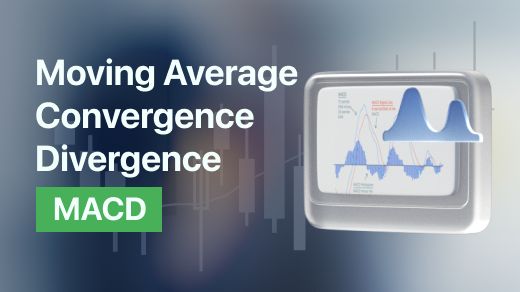
The MACD indicator is a momentum oscillator that measures the amount that an asset's price has changed over a given period of time.
The Relative Strength Index (RSI) is a momentum indicator used in technical analysis,

Bollinger bands were designed to discover opportunities that give investors a higher probability of properly identifying when an asset is oversold or overbought.

Volume is the examination of the number of shares of a security that have been traded in a given period.
STOCH is a technical indicator used in asset trading to predict the upcoming trend in the market.
The SAR (stop and reverse) technical indicator is a useful tool for traders who want to identify potential trend reversals in the market.

Historical volatility is a crucial concept for investors to understand when analyzing the risk and return potential of an investment.
Implied volatility is an essential indicator used in options trading, which represents the market's expectation of future volatility based on the price of options.
The Ease of Movement Value (EOM) developed by Richard Arms, is a technical indicator used to evaluate the relationship between volume and price change.

The Commodity Channel Index (CCI) developed by Donald Lambert, is a popular technical indicator used by traders to identify overbought or oversold conditions in the market.

The Psychological Line (PSY) is a technical indicator used in stock trading that relies on the psychology of market participants.
VWAP is a popular technical indicator that is used by traders and investors to help analyze the trend of a stock's price.

Demark 9 is a technical analysis indicator created by Tom Demark, which is used to identify potential reversals in the market.
Different of Moving Average (DMA)is a short to mid term technical indicator used in stock market analysis. It is also known as the "Parallel Line Difference indicator".
Williams %R, or Williams Percent Range, is a momentum indicator that measures overbought and oversold levels in the market.

Momentum (MOM) is a straightforward indicator that calculates the rate at which the price of a security is changing.
On-Balance Volume (OBV) is a technical indicator that accumulates volume in either a positive or negative value depending on the price movements of the traded asset.
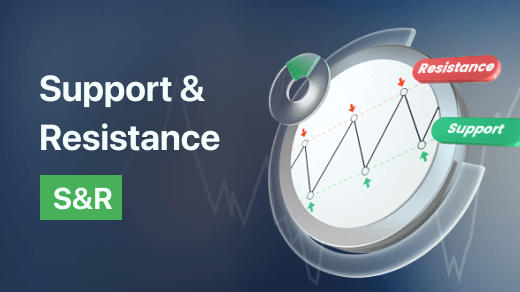
Support and Resistance (S&R) is a technical indicator that identifies critical price points where significant buying or selling pressure may occur.
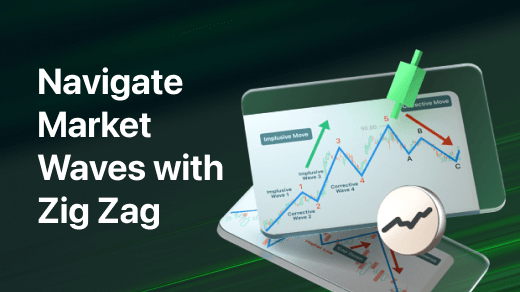
The Zig Zag Indicator is a technical analysis tool designed to identify changes in market trends.